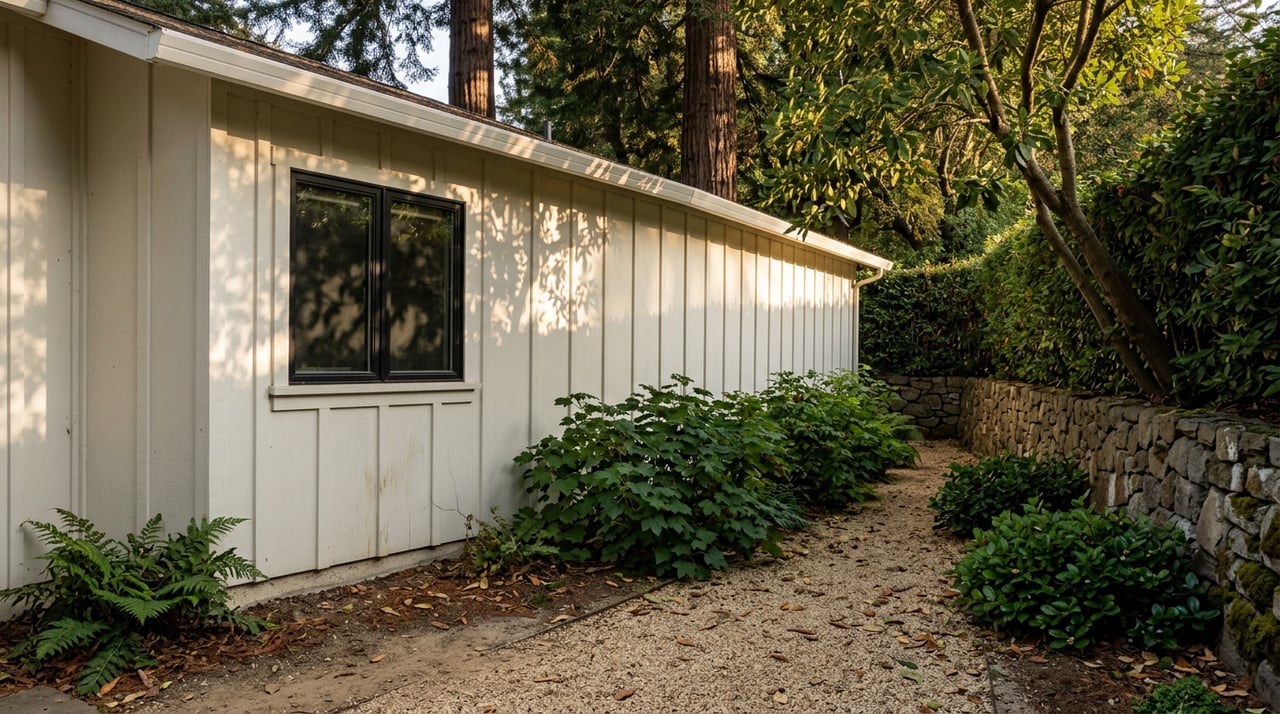
Picture the scenario, because it plays out often enough along this stretch of river to be a pattern rather than an exception. A cabin near Guerneville comes on the market with a year of Airbnb receipts in the disclosure packet, a nightly rate that penciled out nicely against the mortgage, and a listing agent who mentions the rental income almost as if it were a fixture, like the woodstove or the deck. A buyer runs the math, decides the numbers work, and closes escrow assuming the income transfers with the deed.
It does not. In Sonoma County, a vacation rental permit is tied to the person who holds it, not the parcel itself. When a residential property with a vacation rental permit changes hands, that permit does not carry over to the new owner. The buyer has to apply from scratch, and the property has to qualify under whatever rules are in effect on the day of that application, not the day the seller got permitted. A home that was a working rental last month can be flatly ineligible the day after closing, and the reasons why are specific enough that they deserve more attention than most buyers give them before writing an offer.
Why the permit resets to zero at closing
This is not an oversight in the paperwork. Sonoma County has built its vacation rental rules around individual accountability rather than property rights, and the Sonoma County Coalition of Hosts, a group that advocates on behalf of existing hosts, has specifically pushed the Board of Supervisors to let permits transfer with a sale within 120 days of closing, the same way a liquor license does. That the coalition is asking for this change is itself the clearest confirmation that no such transfer right exists today.
The county's own regulatory history explains why the rules are built this way. Permit Sonoma lists three ordinances that shaped the current system: Ordinance No. 6386, adopted August 22, 2022, moved the vacation rental rules into their own section of the county code and disqualified R1-zoned parcels going forward. Ordinance No. 6423, adopted April 24, 2023, layered cap and exclusion zones onto specific parcels in the county's first, fourth, and fifth supervisorial districts, the district that includes the lower Russian River. Ordinance No. 6427, adopted May 16, 2023, added the business license requirement that now sits on top of the zoning permit. Each of those votes tightened eligibility criteria that apply the moment a new owner applies, which is exactly why a permit that predates them offers the current owner no protection for a buyer who comes after.
How zoning changed vacation-rental eligibility in Guerneville
Before a buyer gets anywhere near a cap or an exclusion zone, the property has to clear a more basic hurdle: zoning. Permit Sonoma's vacation rental page lists the zoning districts where a vacation rental permit can be issued at all. In the unincorporated county, that means Agriculture Residential, Rural Residential, Planned Community Rural Residential, and the agricultural and resource zones such as Land Extensive Agriculture, Diverse Agriculture, and Resource and Rural Development. Standard low-density residential zoning, the R1 designation that covers a large share of older river cabins on small in-town lots, was cut from that list in 2022 and has not been added back.
That single zoning line falls unevenly across the river corridor. Permit Sonoma's own summary of the ordinance change notes that the Guerneville Urban Service Area carries some of the highest vacation rental concentration in the county, with most of it sitting on R1-zoned parcels, the small lots platted decades ago when the town was a summer camp destination rather than a second-home market. A cabin on one of those lots is not waiting on a cap to open up or an exclusion zone to lift. It is permanently out of the pool for a new owner, regardless of what the current owner is doing with it. The county considered this significant enough to hold outreach meetings specifically in Guerneville and Monte Rio when it rolled out the new rules. Riverfront acreage a few miles out, zoned Rural Residential or one of the agricultural designations, sits in a completely different category and can still be eligible depending on caps.
What the county's own numbers say about the lower river
Zoning is the first filter, but even an eligible parcel can run into a second one: concentration. The county's regulatory package lets the Board of Supervisors cap or exclude new vacation rentals in neighborhoods where they have already clustered. The Press Democrat's coverage of the 2023 vote reported that Neely Road, along the lower Russian River, had a vacation rental concentration of 19.2 percent, one of the figures county planners used to justify targeting that stretch for tighter rules. For comparison, the same reporting put a section of Sonoma at 41.2 percent concentration, described by a county planner as the most saturated street in the county, which gives some sense of how the lower river's numbers compare on a countywide scale even as they still triggered scrutiny.
The practical effect is that a buyer eyeing the lower Russian River corridor is dealing with two separate, stacked constraints rather than one. The parcel has to be zoned correctly, and if it sits inside a capped area, there has to be room left under that cap on the day of application. A property can clear the zoning test and still lose on the second one if the neighborhood around it has already filled up. A buyer can check the parcel against the county's current map to see whether it falls within a cap area or exclusion zone.
What changed for the people holding permits, not just the parcels
The 2023 ordinances did not stop at zoning and geography. They also changed who is allowed to hold a permit at all. CBS News reported that only an individual person or a trust can hold a vacation rental permit, and each is limited to one at a time. Corporate entities are barred from holding new permits altogether. Sonoma County set a maximum occupancy of 12 guests regardless of a home's size and created a formal business license and complaint hotline to enforce standards around noise, parking, and safety.
That septic detail matters more on the river than almost anywhere else in the county. A buyer evaluating rental potential is really evaluating two separate systems at once: the county's zoning and permit rules, and the physical capacity of the septic system already in the ground. We've written separately about what that inspection process actually involves for river cabins, and it is worth reading alongside this before assuming a bedroom count is fixed.
How to check before you write an offer
The good news is that none of this requires guesswork. Permit Sonoma maintains a zoning lookup tool and a Vacation Rental Map Viewer that let a buyer enter a specific address or parcel number and see the underlying zoning, whether the parcel sits inside a cap area or exclusion zone, and where existing permitted rentals already sit nearby. Before making an offer on any Russian River property where rental income is part of the appeal, the sequence worth running is:
- Confirm the parcel's zoning designation and whether it falls on the eligible list (RR, AR, LEA, DA, RRD) or the ineligible one (R1 and the higher-density residential zones)
- Check whether the parcel sits inside a vacation rental cap zone, and if so, whether the current concentration leaves room under the cap
- Check whether the parcel sits inside an outright exclusion zone, where no new permits are issued regardless of zoning
- Confirm the septic system's approved capacity as part of evaluating rental potential
- Treat any existing rental income the seller shows you as historical information about that seller's permit, not a feature of the house you are buying
This is exactly the kind of rural, land-technical detail a local, zoning-literate advisor can help evaluate during a Russian River purchase. If you are comparing Russian River properties with rental potential in mind, our buyer resources walk through the broader picture of what to evaluate, and our Russian River neighborhood guide covers the towns and corridors referenced here in more depth. We've also written a broader primer on vacation use and hosting rules for Russian River buyers if you want the fuller regulatory picture beyond the permit-transfer question.
A few questions that come up often
If the seller's permit is active on the day I close, does it protect me at all? No. The permit belongs to the seller as an individual or trust. Once the property changes hands, that permit is void for rental purposes and the new owner has to apply fresh under the rules in place at that time.
Can I apply for a new permit before closing, so there's no gap? The safer approach is to confirm eligibility through the zoning and map tools before you're contractually committed, then apply promptly after closing.
Does a hosted rental, where I rent out a room while living there, follow the same rules? Permit Sonoma regulates hosted rentals separately from whole-house vacation rentals.
If rental income is part of why you're looking at the Russian River, the smartest move is checking what a specific parcel can support before using the numbers on another property's Airbnb calendar to estimate potential income. HavenHous works this corridor closely enough to know which stretches may still have room under the rules and which are more constrained. Schedule a personalized consultation and we'll walk through what a property you're considering can and can't support before you write the offer.
This article is general information, not legal, tax or financial advice. Consult a qualified professional about your situation.